
CASE STUDIES
Deliver Clarity Where Consequences Matter
Hardium operates at critical commitment points across nuclear, fuel-cycle and major accident hazard environments.
These representative engagements demonstrate how clarity strengthens governance, integration, delivery and capital confidence in high-consequence systems.
In regulated industries, coherence is not optional.
It is protective.
How to use these case studies
Each summary below is designed for quick scanning.
If the topic matches your current challenge, download the full case study PDF or contact us for a confidential discussion.
Case Study 1 – Nuclear Fuel-Cycle Programme Integration
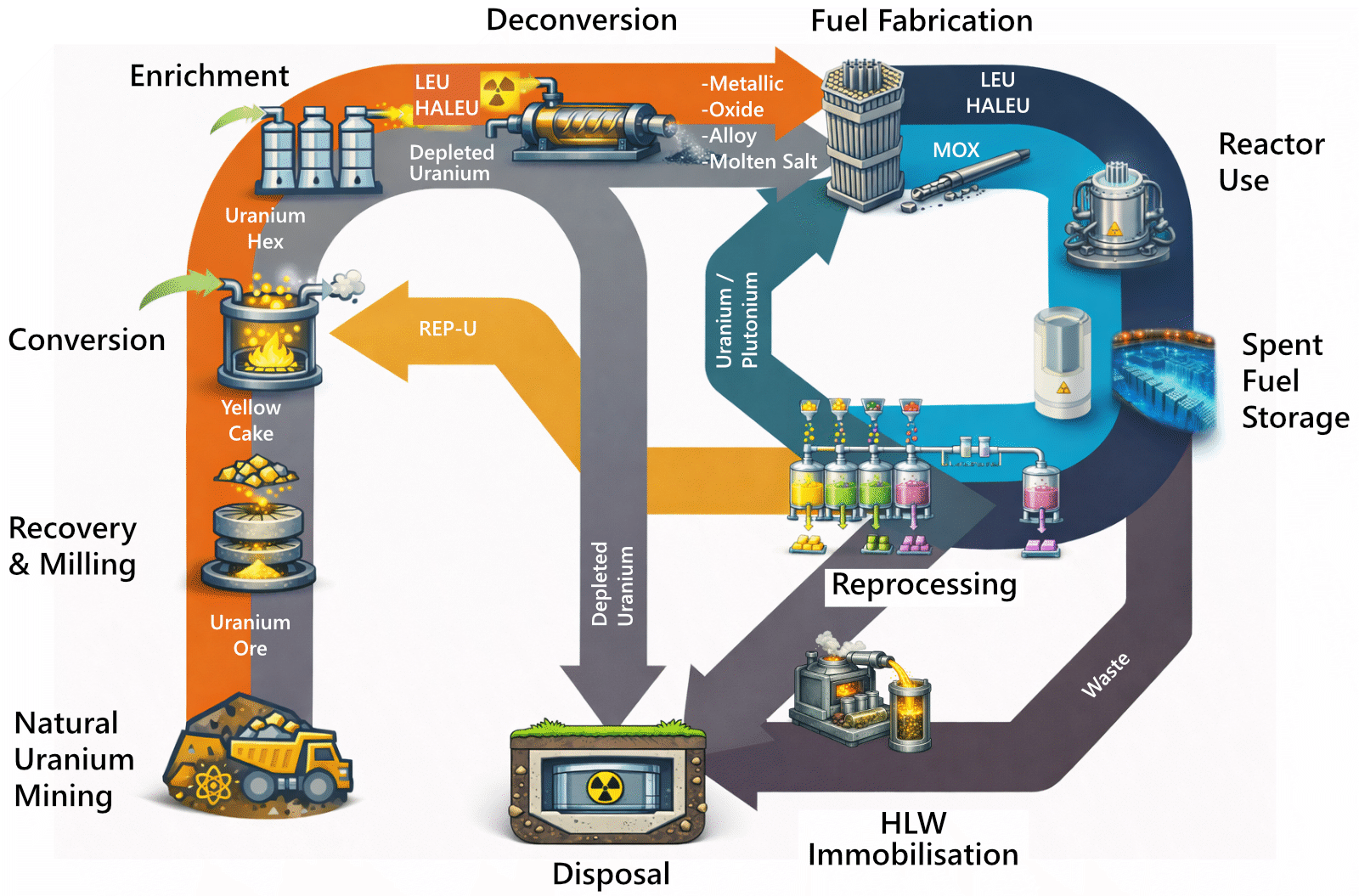
Clarifying complex uranium processing interfaces
Context
Multiple nuclear fuel-cycle initiatives interfaced across conversion, enrichment and materials management programmes.
Challenge
Technical interfaces between programmes were poorly defined, creating risks around engineering alignment, regulatory expectations and programme governance.
Hardium Intervention
Hardium provided independent technical insight to clarify programme architecture.
Key interfaces across conversion, enrichment and deconversion activities were mapped, decision dependencies surfaced, and communication strengthened between engineering teams, programme leadership and regulators.
Outcome
Programme integration risks were reduced and decision-makers gained clearer visibility of technical dependencies.
Engineering teams progressed with greater confidence while maintaining alignment with regulatory and operational expectations.
Download: Case Study 01 (PDF)
Nuclear Fuel Cycle
Governance Framework
Case Study 2 – Governance for Nuclear & Major Hazard Organisations
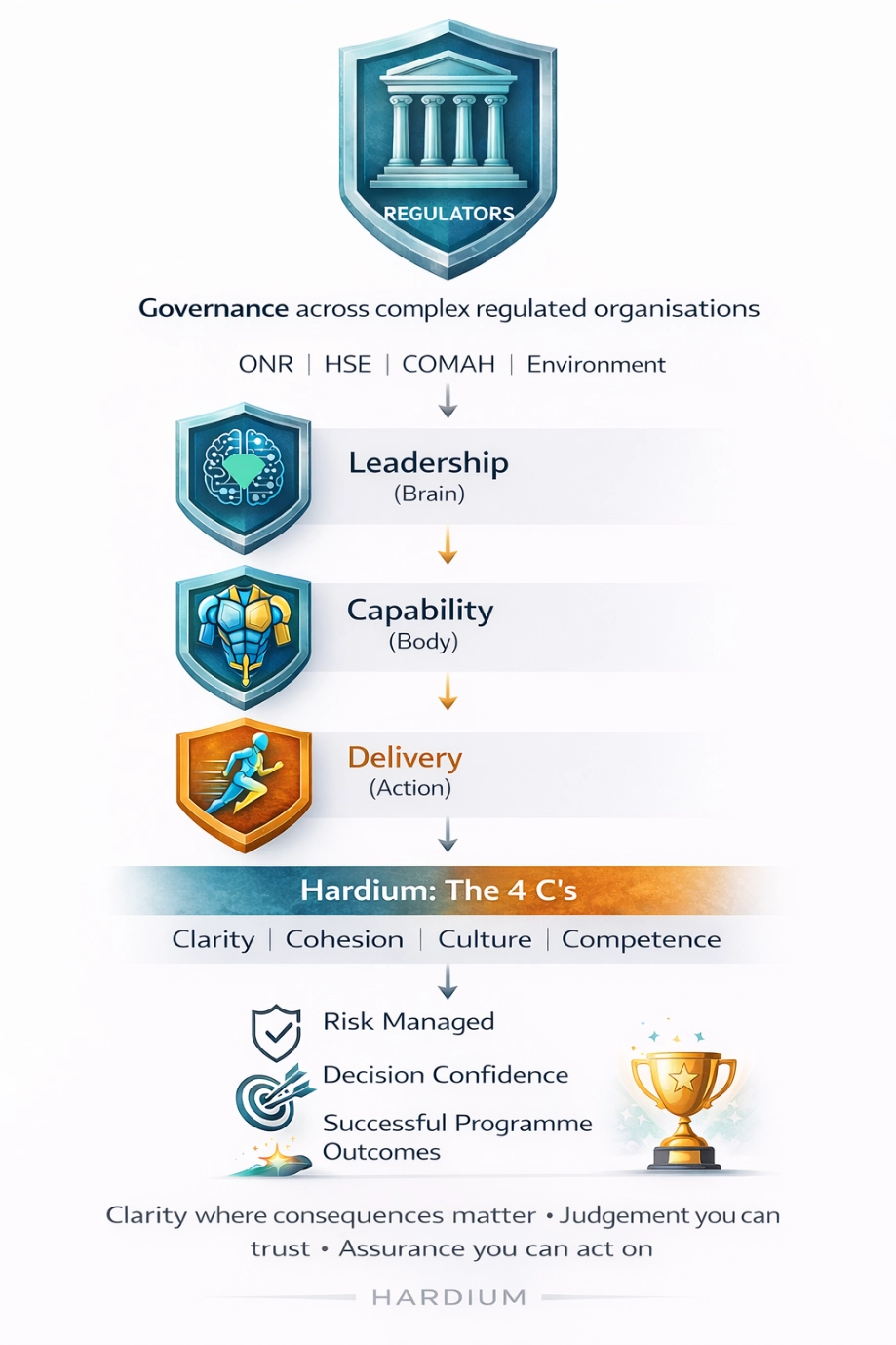
Strengthening engineering authority and leadership accountability
Context
An engineering organisation operating across nuclear and major accident hazard sectors was expanding rapidly, increasing both programme complexity and regulatory exposure.
Challenge
Governance structures had not yet evolved to match programme growth, reducing clarity around engineering authority, risk visibility and leadership accountability.
Hardium Intervention
Hardium reviewed governance arrangements and clarified how technical decisions flowed from engineering teams through programme leadership to board oversight.
Regulatory expectations were mapped against organisational responsibilities to strengthen decision authority and escalation pathways.
Outcome
Leadership gained clearer visibility of programme-level technical risk while engineering teams operated within stronger governance structures.
This reinforced regulator confidence and supported continued programme growth.
Download: Case Study 02 (PDF)
Case Study 03 – Scaling Nuclear Engineering Capability
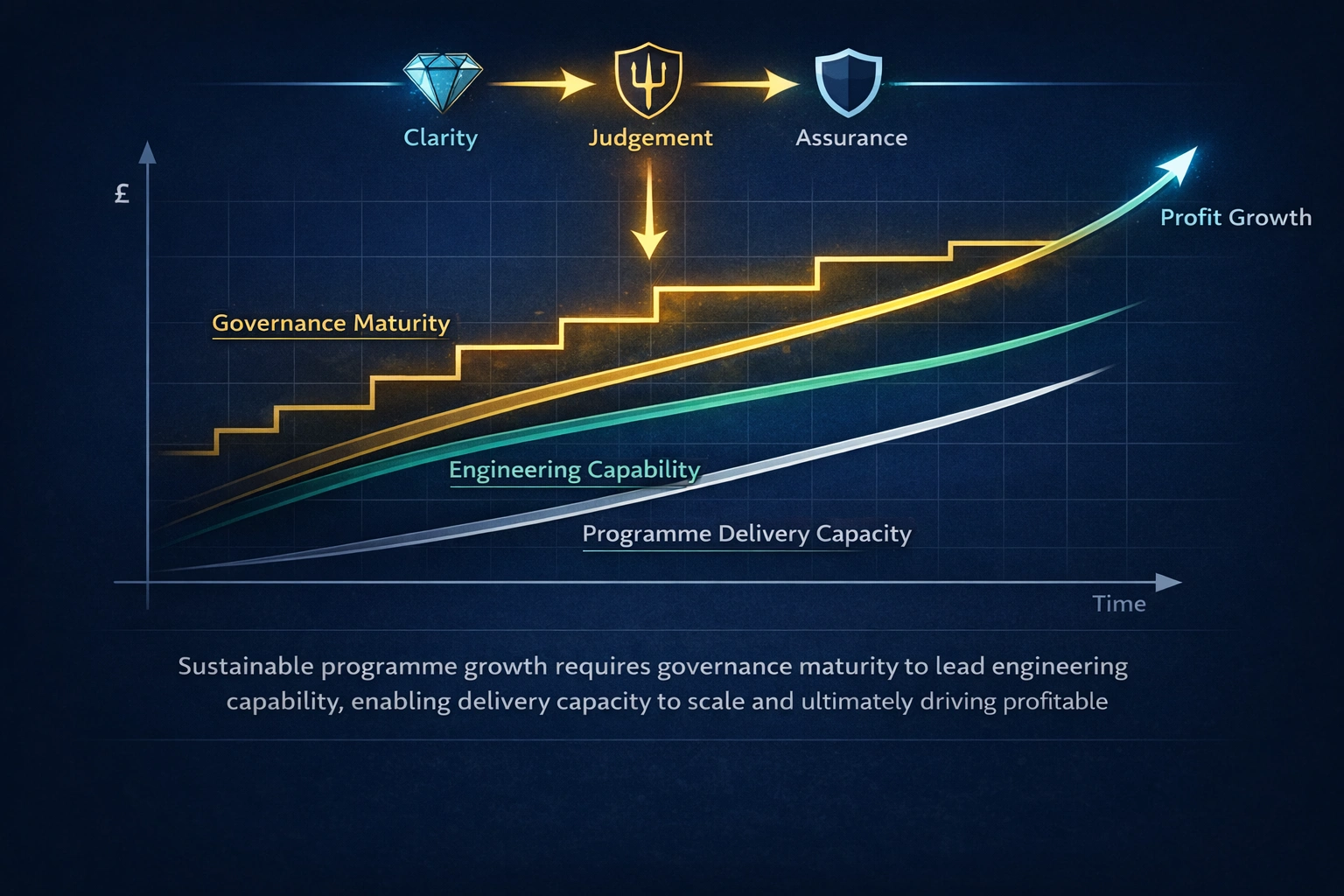
Expanding programme delivery while maintaining engineering discipline
Context
An organisation was rapidly expanding its nuclear programme capability, increasing engineering teams, project complexity and regulatory scrutiny.
Challenge
Growth risked creating fragmentation between engineering leadership, programme delivery and governance structures.
Hardium Intervention
Hardium supported leadership in strengthening technical governance and aligning engineering authority with programme delivery.
Discipline leadership structures and accountability pathways were reinforced to ensure capability growth remained regulator-credible.
Outcome
The organisation successfully expanded its nuclear engineering capability while maintaining strong delivery confidence and governance discipline.
Engineering teams operated within clearer technical authority structures as programme complexity increased.
Download: Case Study 03 (PDF)
Stable Growth
Safety Critical Barriers
Case Study 04 – Process Safety Alignment in Major Hazard Facilities
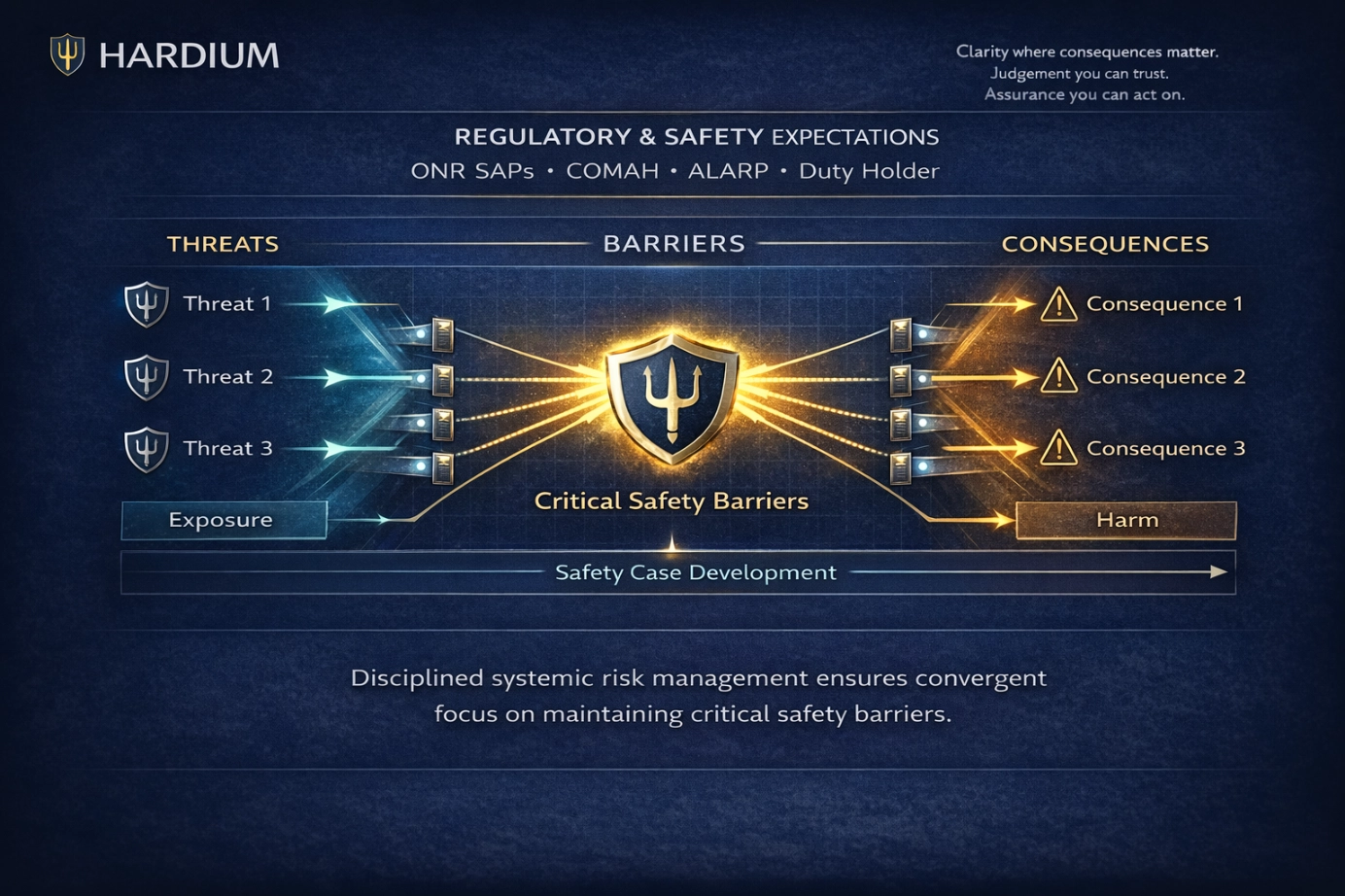
Strengthening critical safety barrier management
Context
A high-hazard chemical facility sought to strengthen alignment between hazard analysis outputs, engineering systems and operational leadership.
Challenge
Fragmented ownership of process safety responsibilities and inconsistent interpretation of hazard analysis outputs reduced visibility of critical safety barriers.
Hardium Intervention
Hardium clarified safety responsibilities, strengthened alignment between engineering design and operational practice, and reinforced understanding of critical safeguards.
Outcome
Engineering and operations teams gained clearer understanding of safety controls and responsibilities.
This improved safety assurance and strengthened operational discipline in managing major accident hazards.
Download: Case Study 04 (PDF)
Case Study 05 – Lifecycle Clarity in Advanced Engineering Programmes
Maintaining coherence from concept to operational delivery
Context
An advanced technology programme required structured oversight as it progressed from early concept development towards engineering implementation.
Challenge
Early technical concepts risked diverging from operational feasibility, regulatory expectations and programme review requirements.
Hardium Intervention
Hardium provided independent insight across key programme stages, strengthening decision-gate discipline and ensuring alignment between technical ambition, engineering reality and regulatory expectations.
Outcome
The programme progressed through development stages with stronger clarity around engineering feasibility and operational implications.
Leadership maintained confidence in the programme’s delivery pathway.
Download: Case Study 05 (PDF)
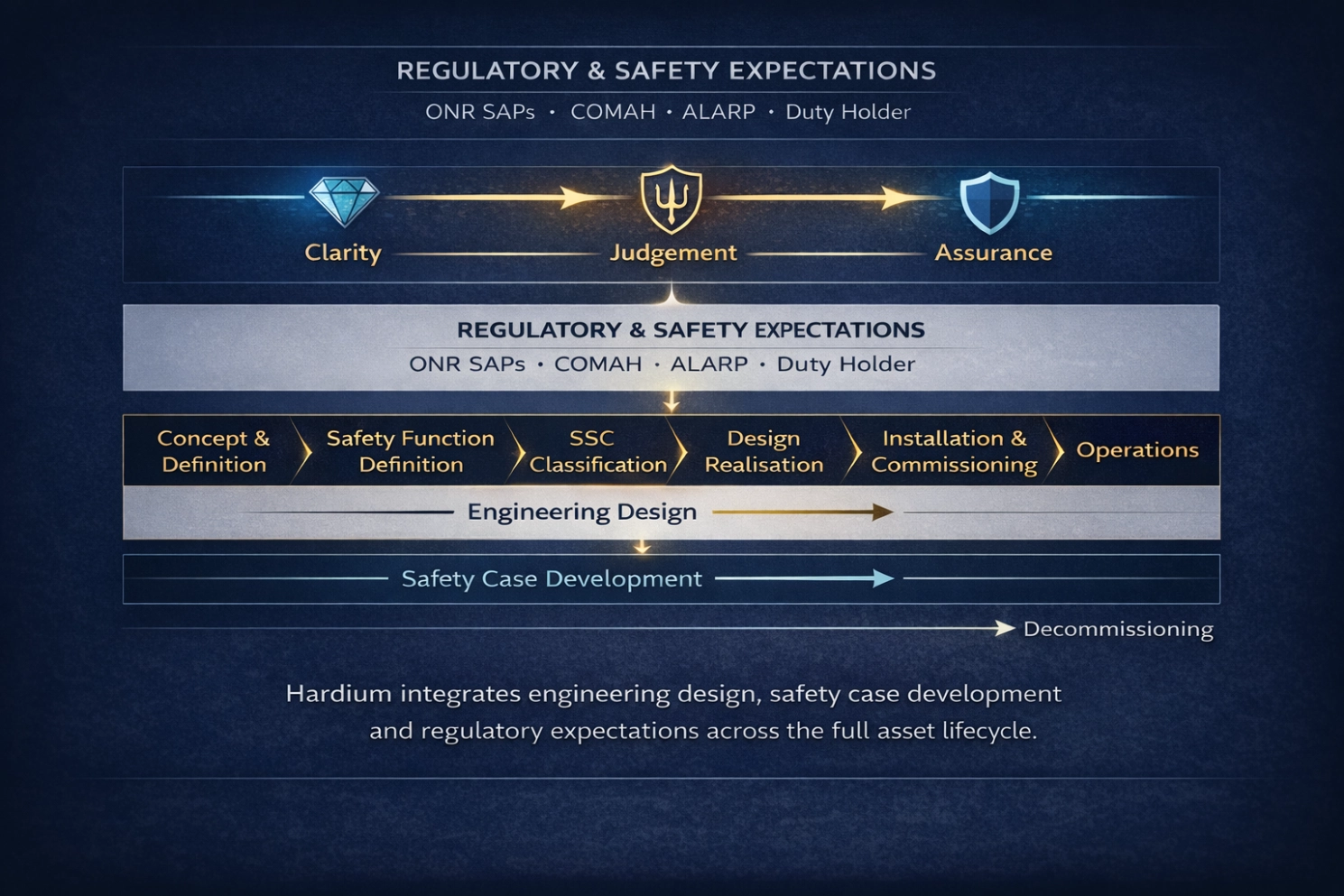
Fully Integrated Lifecycle
Common Outcomes Across Engagements
Hardium is engaged where clarity must be delivered under pressure. Across these representative engagements, clients typically gain:
- Clearer scope and requirements integrity
- Coherent interfaces across disciplines and stakeholders
- Stronger governance and accountability anchoring
- Improved regulator confidence and reduced friction
- Earlier visibility of technical and programme risk
- More defensible commitments and better delivery cohesion
Experience Across High-Consequence Facilities

Hardium has supported organisations operating across a wide range of complex nuclear, energy and major hazard environments. Our experience spans facilities where engineering clarity, regulatory understanding and independent judgement are critical to safe and successful delivery.
Our experience includes work across:
- Nuclear New Build
- Nuclear Fuel Cycle Facilities
- Decommissioning & Waste Management Facilities
- Advanced Reactor Programmes
- Hydrogen & Dangerous Gas Infrastructure
- Advanced Materials & High-Temperature Processes
- Clean Energy Systems
- Major Accident Hazard Facilities (COMAH)
- Pharmaceutical & Regulated Manufacturing Environments
If you would like to understand our experience in a specific facility type or technology domain, please contact Hardium to discuss how we may be able to support your organisation.
Independent expert judgement for complex nuclear programmes.
Discuss a Current Programme Challenge
If you are approaching a critical commitment point – funding decisions, regulator submissions, scope expansion or recovery – a conversation may be appropriate.